
ICEY ARTS URBANISM
CITYSCAPE EFFECTS: The chaining within human ecologies
Once, it was said that “the city is a creation of nature, and that human is by nature a social animal. And s/he who by nature and not by mere accident is without a city is either a vicious human or above humanity.” Aristotle was referring to the entity of a city as a tangible and natural structure of creation surfacing from the innate need of human beings to constitute collectives (human ecologies or ecosystems). Furthermore, he emphasizes how a state facilitate social engagement and support the integration of individuals (as social animals) into the social fabric and its realities. An individual living outside the boundaries of social activity and interaction is either considered vicious or “god”.
Therefore, Cityscape can be seen as an organic “mechanism” with a non-living structure that follows people and their lives. In the 21st century, we acknowledge the presence and importance of dynamic relationships having long shifted from a linear understanding of how parallel systems evolve and function. Through this expo, we strive to enrich our perceptions and understandings surrounding the interactive complexity of both the living and inanimate aspects of a city. Likewise, we endeavor to improve our knowledge on the chaining effects that reinforce individual responses occurring in a sequence to form a complex behavior and to discern at what extend that behavior is a product of dynamic integration between human and its environment (space).
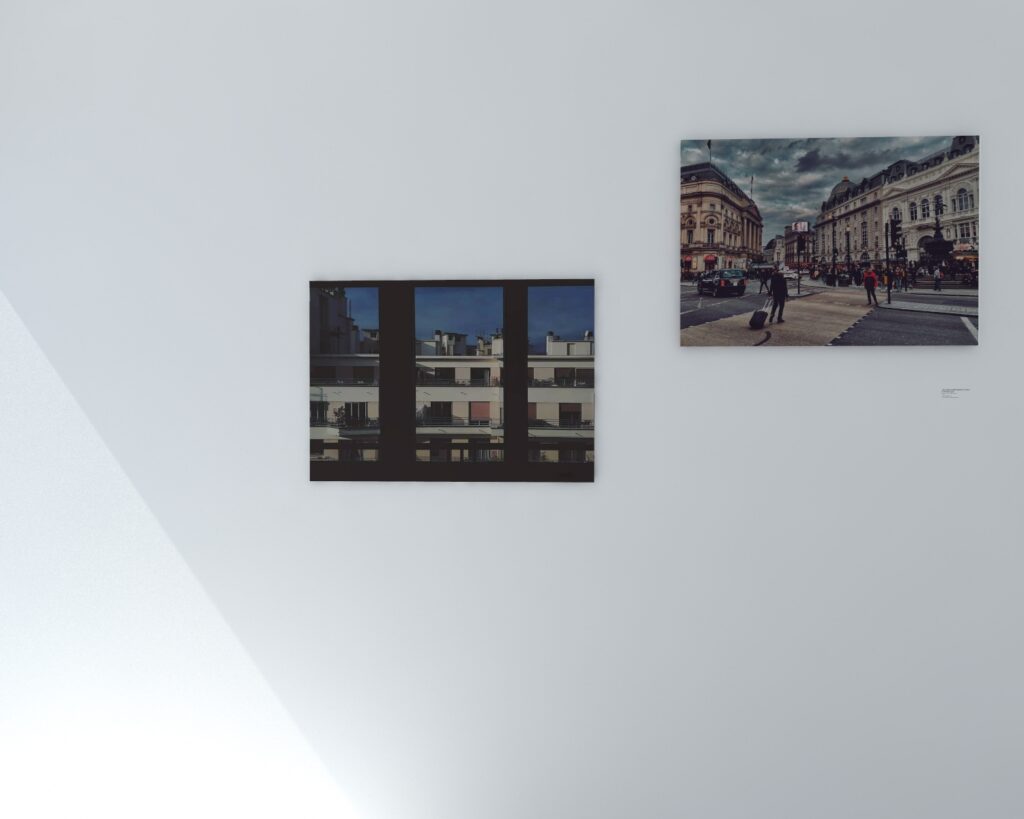
As such, a city is no longer the product of human or a “community”, but instead, a living mechanism that supported by humans and in the service of human kind’s development. The city, as either a word popping-up from a literature or as an image of modern art, constitutes an ever evolving testimony values ascribed to each Era. Furthermore, the spatial form of a city develops new economic forms (K. Marx or M. Weber), new social structures, impacts the well-being of its people, nurtures new ideas (Le Corbusier and W. Gropius).
From Paul Klee’s “Cityscape” painting series, to Giorgio de Chirico’s City, from Alberto Giacometti’s “City Square” to “New Babylon” by Constant Nieuwenhuys or Christo and Jeanne-Claude’s artwork , from Plato’s “Republic” to M. Heidegger’s “Welt” and “Dasein”, from C. Rowe and F. Koetter’s “Collage City” and Jane Jacobs’ “The Death and Life of Great American Cities”, to R. Koolhaas’ “Delirious New York” and “Manhattan Transcripts” by B. Tschumi, from “Terre des hommes” by Antoine de Saint-Exupéry, to the “cities” of Italo Calvino, from the biblical Babylon to the parametrical ‘free market’ city of Zaha Hadid and P. Schumacher, from Euclid’s and Descartes’ works on geodesy and geometry to A. M. Lyapunov mappings of “chaos”, from a simple “on stage” performance to National Theatre of London’s Jane Eyre Performance of 2017, or from “Cults, Territory, and the Origins of the Greek City-State” by F. De Polignac to a comparison of a human to an ants’ “city”, someone can research, collocate facts, analyze, take stand and comment on one’s contemporary city or its history.
ELEMENTS OF CITYSCAPE
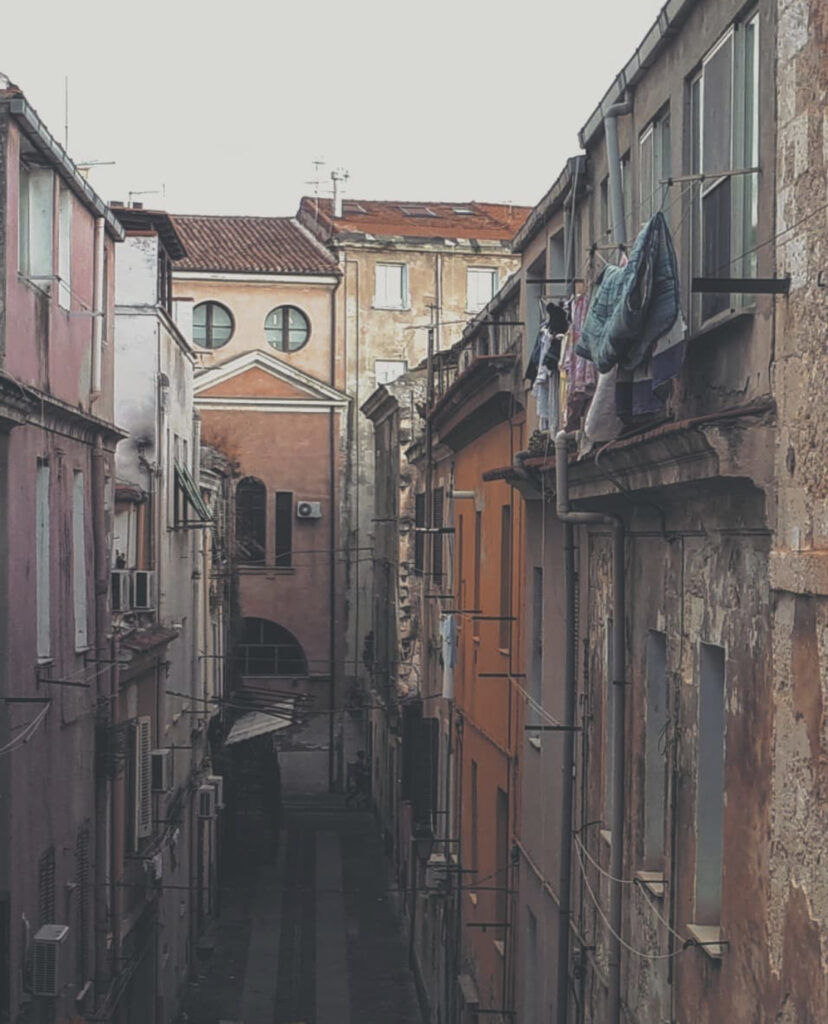
One can deconstruct the urban landscape’s elements into:
- its artificial environment (buildings, squares, museums, urban voids or parking lots etc.),
- its natural environment (parks, forests, coastline or river /stream banks),
- the events taking place within it and its collective landscape,
- or the actors taking part on every event (human, biodiversity – flora or fauna, authorities or policy makers, companies, real estate developers, NGOs, pets etc.).
On another level, someone could add:
- the layer of time (temporariness, permanence),
- human perception – mental (culture, habits) or physical (smell, sound, vision/light – night and day),
- the spatial politics (laws and unofficial claim of space),
- the human ideas on space (equality of space: gender issues, transport (car, bike, pedestrians, trams), animal rights),
- and the urban memory (memorials, landmarks or heritage, beloved spaces within cityscape with or without aesthetical and / or historical importance).
THEMATIC
Someone can examine the chain effects of the relationship in cityscape through
- HIGHRISE – AD HOC DEVELOPMENT,
- VIRTUALITY – SPATIALITY – TRADITION,
- ENVIRONMENT – PUBLIC SPACE,
- ENVIRONMENTAL PSYCHOLOGY – SPATIAL POLITICS / POLICIES,
- BARRIERS – BORDERS – BOUNDARIES – LIMITS.
The dual notions’ relationship, for each of the above thematic can be explored as a cohesive, confrontational or as an inner juxtaposition relationship of contradiction (R. Venturi) or disjunction (B. Tschumi). We encourage participants to view this exhibition as an opportunity of voicing themselves towards authorities, private developers and the public itself.
CONTEXT
The exhibits may include, amongst other: proposals, built or unbuilt elements of work, artefacts, pavilions, essays or poetry, music, projections, presentations, performances of any kind. Moreover, a three-day conference will take place, alongside numerous other events and “rave type” public performances within the cityscape.
Through these exhibits, young people are invited to raise questions, as well as provide answers in any of the themes explored. The exhibits shall examine the interrelation of city and humans relating to the five above mentioned (5) themes.
The exhibition shall include ten (10) pavilions placed in open space, and additional ones to restaurants, galleries, or other spaces within the city. The exhibits will examine the complex spatial and organic nature of a city and the relationship between related disciplines such as architecture, urbanism, landscape architecture or design, interior design, public art, performing arts, or service design, as well as non-spatial disciplines, such as the humanities (or human sciences), natural (or exact) sciences and /or social sciences.
What is essential in this exhibition is that everyone taking part is to contribute towards a clear position in relation to the city’s contemporary development. The goal is to induce a “public discussion” on the subject and raise relevant questions.
APPROACH
In approaching the subject matter, we encourage the participants to use methods such as mapping and/or recording. Utilizing any other forms of media, is also welcomed in presenting parts or the whole of a site specific or imaginary city. exaggeration or true realism/ naturalism, utopian or dystopian approaches can prove effective in delivering intended messages to the public.
Client Testimonials

A Title to Turn the Visitor Into a Lead
© 2026 All Rights Reserved.